

Corporate Training Platform Kenya
Fast Onboarding System Adoption Workforce Skills Growth
Simplify corporate training with one centralized platform for enrollments, M-Pesa payments, Zoom sessions, attendance tracking, assignments, and learner engagement. Reduce manual work, improve completion rates, and deliver a better learning experience at scale.
- Built for African organisations
- Fast onboarding
- Customisable & fully supported
- For teams of all sizes

Explore & learn
The uncomfortable reality most companies already know
Many companies in Kenya have already digitized payroll, accounting, communication, and recruitment.
But training?
Training is still happening through:
- scattered WhatsApp groups,
- emailed PDFs nobody reads,
- Zoom links lost in inboxes,
- manual attendance sheets,
- Excel tracking,
- and HR officers chasing employees for course completion updates.
The bigger problem is not that organizations lack training content.
The problem is operational delivery.
Most HR teams are struggling with:
-
onboarding consistency,
-
compliance tracking
-
branch-level learning visibility
-
certification management
-
learner engagement,

Perfect For;
This becomes even more complicated in African work environments where:
-
internet reliability varies,
-
many employees primarily use Android phones,
-
field teams rarely sit behind desks,
-
training budgets are scrutinized heavily,
A lot of global LMS platforms were built assuming:
- every learner has a laptop,
- stable broadband,
- credit cards,
- and high digital literacy.
That assumption breaks quickly in many African operational environments.
This is why corporate training systems are becoming less about “eLearning software” and more about operational learning infrastructure.
And that distinction matters.
Problem Solved
What Is a Corporate Training System?
A Corporate Training System helps organizations manage, deliver, and track training from one centralized platform.

Perfect For;
Why Corporate Training Has Changed So Fast
The old model no longer works
Five years ago, many organizations relied on:
- physical workshops,
- hotel conference training,
- paper manuals,
- in-person onboarding,
- and quarterly seminars.
Today, that model struggles because work itself has changed.
Organizations now manage:
- hybrid teams,
- distributed field workers,
- remote onboarding,
- rapid upskilling,
- compliance pressure,
- software adoption training,
- and continuous professional development.
The pace of operational change is now faster than traditional training cycles.
A company may:
- adopt a new CRM this month,
- restructure customer support next quarter,
- and deploy AI workflows six months later.
Training can no longer depend entirely on physical workshops.
A corporate training system is a platform used by organizations to:
- onboard employees,
- deliver internal training,
- track learning progress,
- automate certifications,
- assess knowledge,
- manage compliance,
- and standardize workforce education.
At a practical level, a corporate training system replaces fragmented learning workflows with a centralized structure.
Instead of:
- HR emailing PowerPoint files,
- managers forwarding WhatsApp voice notes,
- and employees forgetting training links,
everything becomes organized inside one environment.
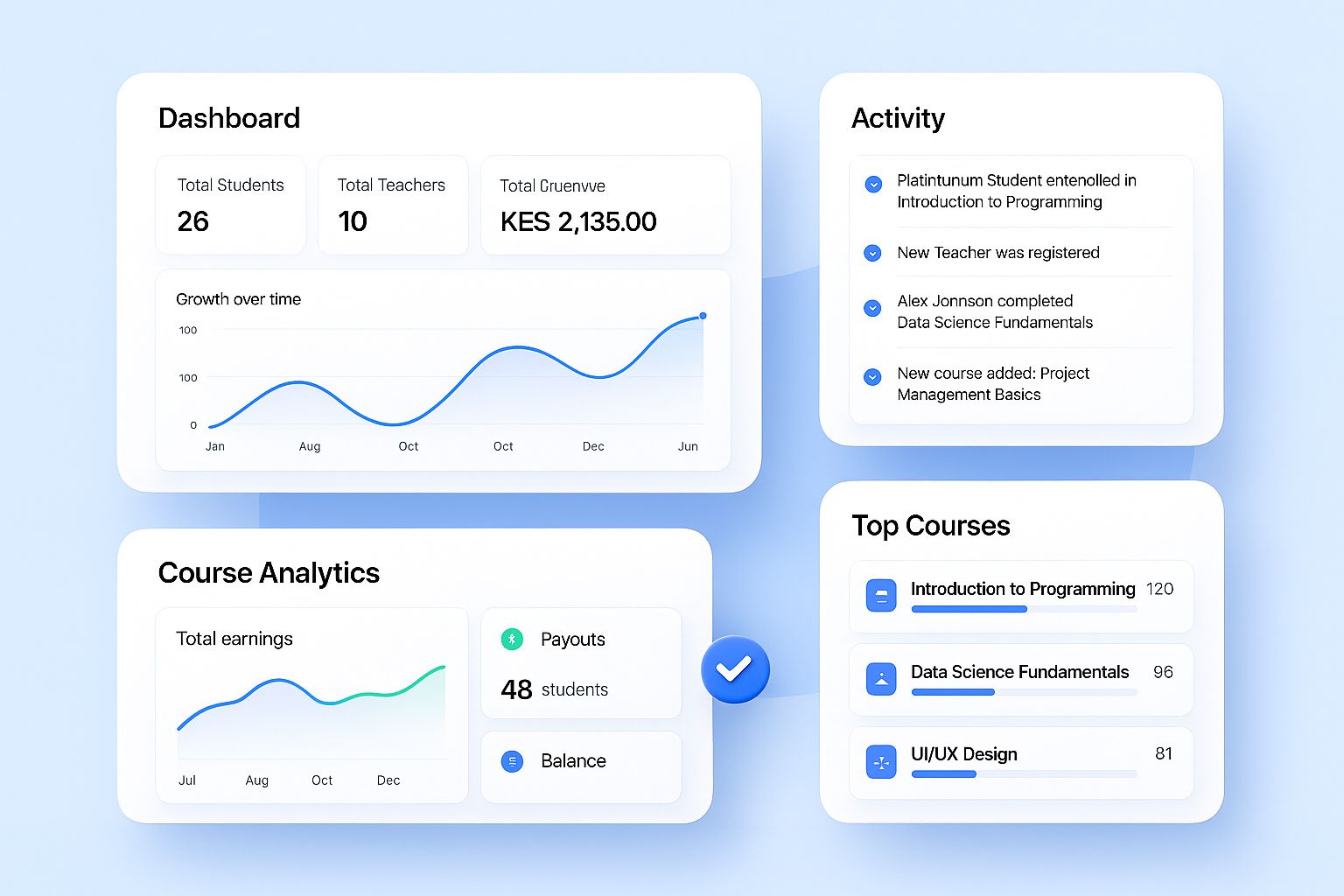
Modern systems typically include:
- course hosting,
- quizzes,
- assessments,
- certificates,
- cohort learning,
- analytics,
- role-based learning paths,
- automation,
- mobile access,
- AI-assisted learning,
- integrations,
- and reporting dashboards.
But in African markets, the definition has evolved further.
A useful corporate training system must also handle:
- mobile-first learning behavior,
- WhatsApp communication culture,
- low-bandwidth access,
- regional payment systems like M-Pesa,
- distributed teams,
- and operational simplicity.
Why Ujuziplus Wins
Why This Matters Specifically in Kenya and Africa
The African operational reality is different
Many global HR tech companies underestimate how differently workforce learning operates in African environments.
Example 1: Device behavior
In many Kenyan organizations:
- field officers,
- sales teams,
- branch staff,
- and support teams
primarily access learning through smartphones.
Desktop-first learning platforms create friction immediately.
Example 2: Communication culture
Training communication in many African organizations heavily depends on:
- WhatsApp groups,
- internal Telegram channels,
- SMS reminders,
- and direct mobile communication.
A corporate training system that ignores this behavior often sees poor adoption.
Example 3: Payment infrastructure
External training providers, consultants, and corporate academies frequently depend on:
- M-Pesa,
- bank transfers,
- invoices,
- and mobile payments.
Many international platforms optimize primarily for:
- cards,
- Stripe subscriptions,
- or PayPal.
That creates operational friction locally.
Example 4: Connectivity realities
Low-bandwidth optimization matters.
Employees in:
- field operations,
- NGOs,
- regional branches,
- or remote counties
often experience inconsistent connectivity.
Heavy LMS interfaces reduce engagement dramatically.
The Real Problems HR Teams Are Trying to Solve
1. Inconsistent onboarding
Many organizations still onboard employees differently depending on:
- branch,
- department,
- or manager.
This creates:
- inconsistent culture,
- uneven product knowledge,
- compliance risks,
- and poor employee experiences.
A proper corporate training system standardizes onboarding.
2. No visibility into learning progress
A common HR frustration:
“We trained people, but we don’t know who actually completed the learning.”
Manual tracking breaks quickly once organizations scale beyond small teams.


4.Compliance tracking headaches
Industries like:
- healthcare,
- finance,
- logistics,
- manufacturing,
- and NGOs
often require:
- recurring certifications,
- policy acknowledgment,
- safety training,
- or audit-ready records.
Spreadsheets become risky at scale.
3. Training fatigue
Employees ignore:
- long PDFs,
- endless Zoom calls,
- and generic training sessions.
Modern learners expect:
- short-form content,
- mobile accessibility,
- interactive learning,
- and self-paced flexibility.
What a Modern Corporate Training System Should Actually Include
Core functionalities every organization needs for scalable and effective training.
AI Is Quietly Reshaping Corporate Training
Most conversations about AI in learning are still too abstract.
The practical changes are more operational than futuristic.
Where AI is actually helping HR teams today
AI-generated quizzes
Instead of manually writing assessments, trainers now generate:
- onboarding quizzes,
- compliance tests,
- refresher questions,
- and certification assessments
in minutes.

Perfect For;
The Rise of Cohort-Based Corporate Learning
Why self-paced training alone often fails
A major issue with purely self-paced corporate learning is accountability.
Completion rates drop when:
- employees feel isolated,
- training lacks deadlines,
- or learning feels disconnected from work culture.
This is why cohort-based learning is growing.
Cohort learning combines:
- schedules,
- peer accountability,
- discussion,
- instructor interaction,
- and shared progress.
It works especially well for:
- leadership development,
- onboarding programs,
- sales training,
- management development,
- and certification programs.
AI-assisted content structuring
Many experts know their subject matter but struggle to structure training.
AI helps convert:
- SOPs,
- meeting notes,
- policies,
- workshop recordings,
- and presentations
into structured learning modules.
AI tutors and learner support
Employees increasingly expect instant answers.
AI-powered learning assistants now help answer:
- onboarding questions,
- policy clarifications,
- workflow explanations,
- and training guidance.
Administrative automation
AI reduces repetitive HR tasks like:
- learner follow-ups,
- reminders,
- quiz generation,
- onboarding sequencing,
- and reporting summaries.
That matters because many HR teams are already overstretched.
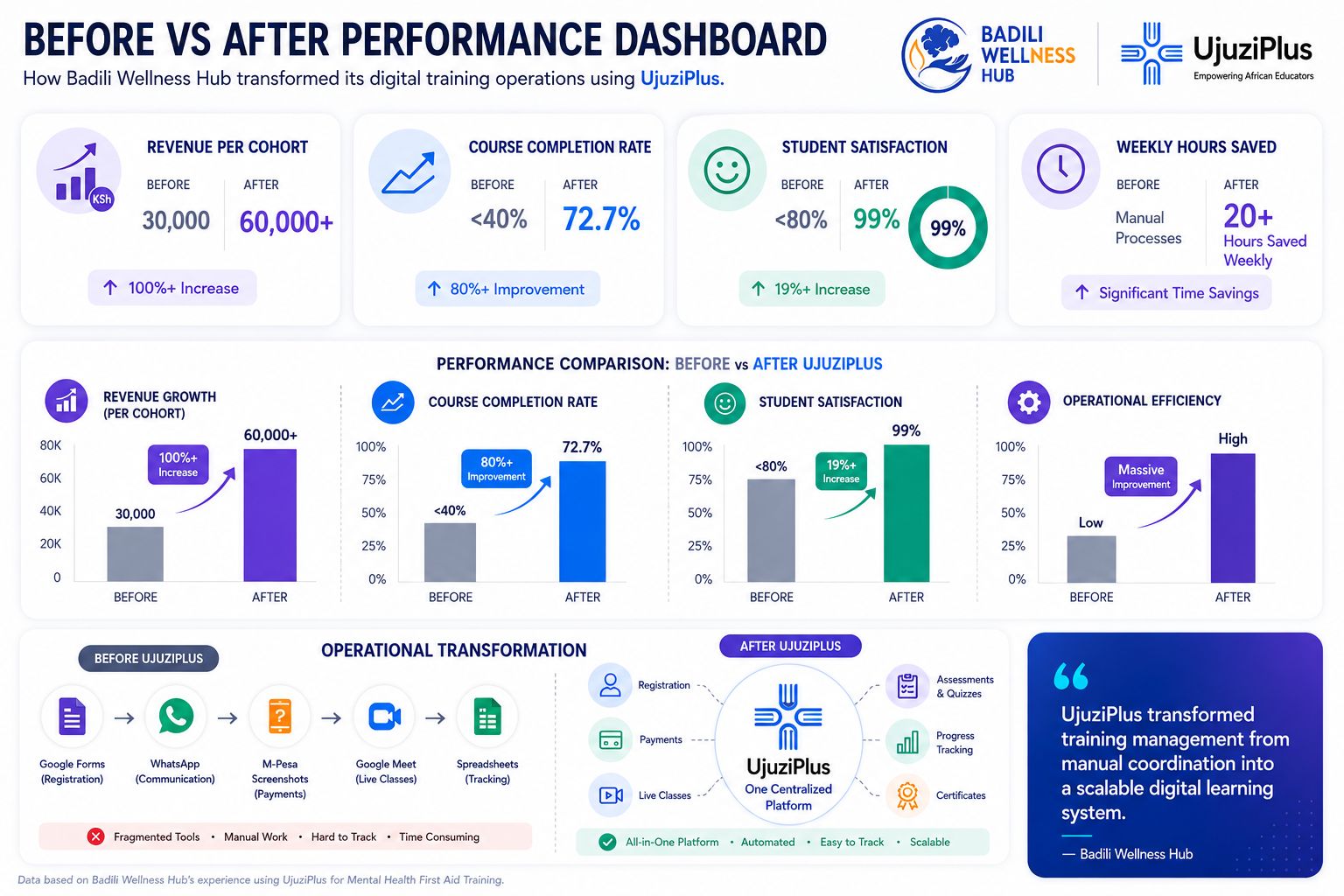
The Hidden Cost of Poor Corporate Training Systems
Most organizations underestimate operational leakage
Poor training systems create:
- inconsistent service delivery,
- onboarding delays,
- repeated mistakes,
- customer experience issues,
- and compliance risk.
These costs rarely appear directly on accounting reports.
But they affect:
- productivity,
- employee retention,
- operational quality,
- and management efficiency.
Our advantage
Common Mistakes Organizations Make
How Companies Use Corporate Training Systems in Practice
HR onboarding
Standardized onboarding for:
- remote employees,
- branch staff,
- and contractors.
Compliance training
Recurring:
- policy training,
- safety certifications,
- and audit documentation.
Sales enablement
Sales teams learn:
- products,
- scripts,
- workflows,
- and customer handling.
NGO learning programs
NGOs train:
- community facilitators,
- volunteers,
- regional teams,
- and program coordinators.
Franchise training
Businesses standardize operational knowledge across multiple locations.
Frequently Asked Questions
A corporate training system is software used to manage employee learning, onboarding, assessments, compliance training, certifications, and workforce development.
Manual workflows create:
- inconsistent onboarding,
- poor visibility,
- administrative overload,
- and weak learning accountability.
Yes. In many African markets, smartphone-based learning is actually the dominant learning behavior.
AI helps automate:
- quiz creation,
- learner support,
- onboarding workflows,
- reporting,
- and content structuring.
Common sectors include:
- NGOs,
- finance,
- healthcare,
- logistics,
- education,
- retail,
- and distributed sales organizations.
Why UjuziPlus Fits the African Training Environment Differently
Many learning systems were designed for markets where:
- broadband is stable,
- desktop usage dominates,
- and card payments are standard.
African learning environments operate differently.
UjuziPlus positions itself around:
- mobile-first learning,
- AI-assisted training,
- WhatsApp-compatible workflows,
- cohort learning,
- and localized operational realities.
The positioning is less about “selling courses” and more about helping organizations operationalize learning efficiently.
That distinction matters for:
- HR departments,
- trainers,
- NGOs,
- and corporate learning teams managing real workforce complexity.