


Introduction
Employee training is no longer a “nice-to-have”—it’s a survival strategy. In African markets, where industries are rapidly digitizing and compliance requirements are tightening, companies need scalable, mobile-first learning solutions. Yet many HR teams still rely on WhatsApp groups, spreadsheets, and manual M-Pesa confirmations to manage training.
This article explores the best LMS (Learning Management Systems) for employee training, with a focus on African realities: mobile-first usage, low-bandwidth environments, WhatsApp communication culture, and M-Pesa-driven transactions.
What is an LMS for Employee Training?
A Learning Management System (LMS) is a digital platform that helps organizations:
- Deliver structured training programs.
- Track employee progress and certifications.
- Automate onboarding and compliance training.
- Provide mobile-first access for distributed teams.
- Integrate with HR and payroll systems.
Why LMS Matters for Employee Training in Africa
- Distributed workforces: Employees often work across multiple towns and rural areas.
- Regulatory compliance: Industries like banking, healthcare, and transport require certified staff.
- Mobile-first reality: Most learners access training via Android phones.
- Operational inefficiencies: Manual tracking through WhatsApp and spreadsheets is error-prone.
Real-World Observations
- In Kenya, HR managers often confirm training attendance via WhatsApp and reconcile payments manually through M-Pesa.
- In Nigeria, banks struggle to track compliance certifications across multiple branches.
- In Uganda, learners drop off when training modules are too long or not optimized for mobile.
Step-by-Step Breakdown: Choosing the Best LMS
- Identify training needs
- Onboarding, compliance, leadership development, digital skills.
- Evaluate LMS features
- Mobile-first design, offline access, WhatsApp integration, M-Pesa support.
- Localize content
- Translate into Swahili or local languages; use culturally relevant examples.
- Automate processes
- AI tools can generate quizzes, reminders, and personalized learning paths.
- Track progress
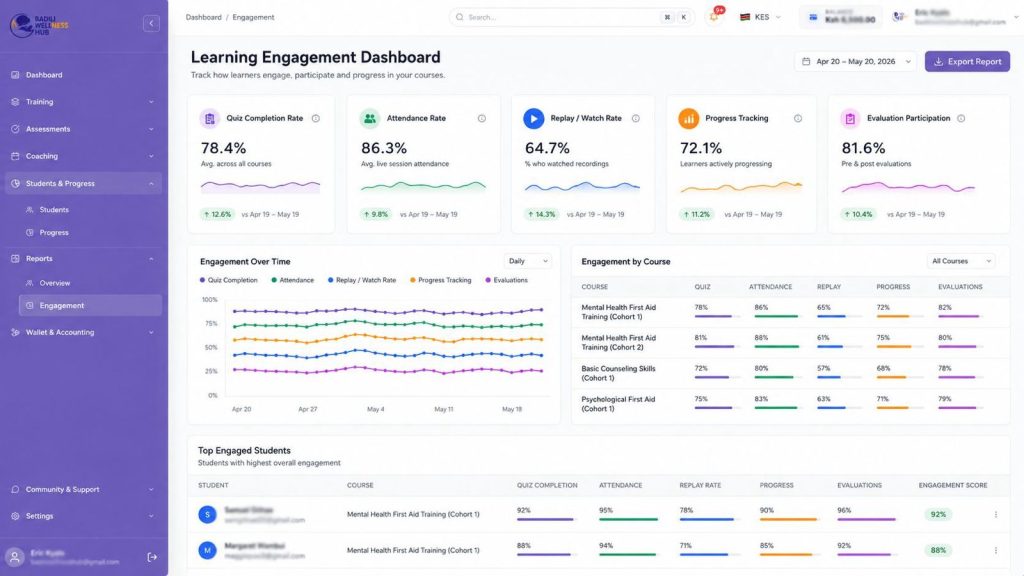
- Dashboards for HR teams to monitor completion rates and certifications.
- Generate reports
- Automated compliance certificates for audits.
Market-Specific Insights
- Mobile-first usage: Learners are far more likely to access training via Android phones.
- Bandwidth constraints: Offline access or lightweight formats are essential.
- Payment realities: Integration with M-Pesa is critical for monetization and accessibility.
- Communication culture: WhatsApp remains the default channel for learner engagement.
Trends in Employee Training LMS
- AI tutors: Personalized learning paths for employees.
- AI-generated quizzes: Reducing repetitive work for HR trainers.
- Hybrid work compliance: Remote onboarding and digital upskilling.
- WhatsApp learning: Micro-learning modules delivered via chat.
- Creator economy growth: Independent trainers monetizing corporate training courses.
Common Mistakes
- Treating training as a one-time event instead of continuous learning.
- Using desktop-heavy platforms in mobile-first markets.
- Ignoring language and cultural localization.
- Failing to integrate with local payment systems like M-Pesa.
Frequently Asked Questions
Q: What LMS works best for mobile learners in Africa? A: Platforms that prioritize Android access, offline learning, and WhatsApp integration.
Q: How do trainers accept M-Pesa payments online? A: By integrating LMS platforms with M-Pesa APIs or using third-party gateways.
Q: Why do learners drop off in online courses? A: Long modules, poor mobile optimization, and lack of engagement reminders.
Q: How do African trainers monetize courses? A: Through mobile money payments, subscription models, and cohort-based learning.
Comparison Insights
| Feature | Traditional Training | Modern LMS for Africa |
|---|---|---|
| Enrollment | Manual, WhatsApp | Automated, AI-assisted |
| Payments | Cash, M-Pesa manual | Integrated M-Pesa |
| Tracking | Spreadsheets | Dashboards & reports |
| Accessibility | In-person only | Mobile-first, offline |
| Certification | Paper-based | Digital certificates |